
Path to Nowhere
AISNO GamesRole Playing
4.51.73K Reviews
- Version
- 1.9.2.0
- Installs
- 1.00M
- Age Rating
- Teen
Screenshots
Our Review of Path to Nowhere
 Analysis by Appyee
Path to Nowhere made a strong first impression on me because it understands that a role-playing game does not need to shout constantly to feel intense. Its dark presentation, tense story scenes, and tactical battles work together instead of feeling like separate layers placed on top of one another. I spent as much time watching the mood develop as I did planning where to place characters, and that balance is the main reason AISNO Games’ game stands out among mobile RPGs.
It is free to play, carries a Teen content rating, and is available for devices running Android 8.0 or later. The game launched on October 21, 2022, and its current version is 1.9.2.0. On the store, it is described as a real-time strategy RPG, but that label only tells part of the story. The experience combines character collection, narrative investigation, and grid-based combat where timing and positioning matter more than simply choosing the strongest-looking unit.
The public response is also substantial: it has passed 1 million installs, with an average rating of 4.5 from around 116 thousand ratings and roughly 1.7 thousand written reviews. Those figures do not replace personal experience, but they do match my impression that this is a polished, established mobile game rather than a brief experiment. The important question is whether its particular blend of bleak fiction and tactical play suits you.
A bleak setting that speaks through images and tension
I find the game's bleak visual world most effective when it leaves room for the player to read a scene rather than explaining every detail at once. This section looks at how character design, framing, and the gradual release of story context build that uneasy mood—and why taking the opening at your own pace makes its later conflicts easier to follow.
The first hours establish a very specific mood
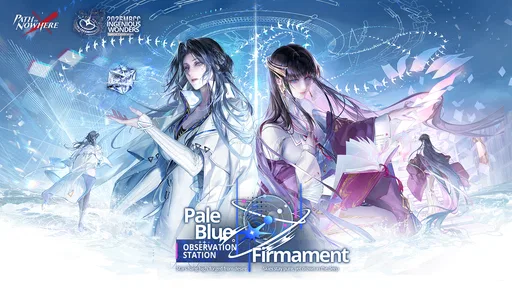
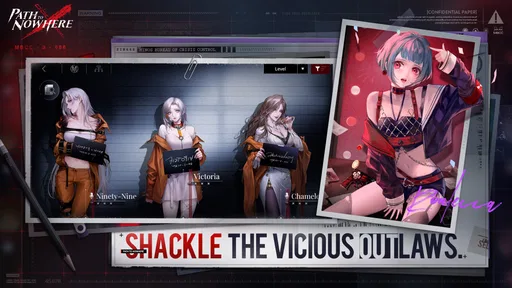
The opening does not treat its setting as simple decoration. The world feels damaged, controlled, and uncertain, and the visual direction keeps returning to that sense of pressure. Characters are presented with sharp silhouettes, expressive portraits, and a style that can move from elegant to unsettling without losing its identity. I found the art direction more memorable than the usual bright fantasy look common in mobile character games.
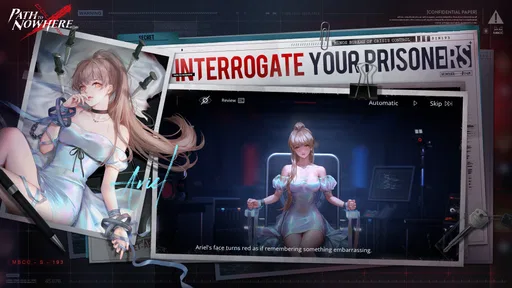
That visual consistency helps the story land. Even when a scene is mostly dialogue, the framing and character expressions give it weight. The game wants me to pay attention to motives, distrust, and the consequences of power, rather than skim through a cheerful adventure before the next battle. Some conversations are deliberately heavy, so players looking for a light, disposable pastime may find the tone demanding.
The setting also gives the characters room to feel like more than combat portraits. Their designs communicate personality before every detail is explained, while the story gradually adds context through conversations and missions. I enjoyed noticing how a character’s appearance, speech, and role in battle often point in the same emotional direction. That cohesion is one of the game’s quiet strengths.
Why the art works better than a simple visual hook
A common problem in character-driven RPGs is that attractive artwork becomes disconnected from the actual play. Here, the presentation usually supports the fiction. Menacing enemies, confined locations, and tense encounters make the battles feel like extensions of the setting instead of unrelated puzzles. The game’s visual language tells me that every confrontation is part of a larger crisis.
There is also a useful contrast between stillness and danger. A character portrait can look composed while the surrounding situation suggests that everything is about to break down. That contrast gives the story a more mature rhythm. I was not constantly pushed toward spectacle; instead, the game often let discomfort build through short exchanges and carefully chosen images.
My practical advice is to play with enough uninterrupted time for the early narrative sections. If you tap through dialogue while distracted, you will still reach the combat, but you will lose much of the reason the encounters feel meaningful. This is not a game I would recommend treating as background noise during a commute unless you are comfortable pausing frequently.
A world that may not suit every player
The darker setting is a genuine strength, but it is also a filter. Players who want colorful fantasy heroes, relaxed humor, or a straightforward good-versus-evil plot should look elsewhere. The Teen rating is worth taking seriously because the game leans into disturbing ideas and serious emotional situations. It is not relentlessly graphic, but its atmosphere is not designed to feel comforting.
I also noticed that the narrative asks for patience. The game introduces terminology, organizations, and personal conflicts that are easier to appreciate when read in sequence. If you prefer a story that explains everything immediately, the slower accumulation of context may feel like work. For me, that gradual approach made the setting more convincing, but it will not be equally appealing to everyone.
Sound, pacing, and the feel of a controlled crisis
The audio and changing tempo help distinguish the moments spent observing a crisis from the moments spent trying to contain it. I’ll look at how that restraint supports the atmosphere, while also considering when the shifts between dialogue and active play can feel slow or mentally demanding.
Audio that supports rather than overwhelms
The sound design contributes to the game’s identity by keeping the mood tense without turning every moment into an action trailer. Menus, dialogue, and battles feel like parts of the same world. The result is a more coherent experience than a game that switches abruptly between dramatic story music and generic combat effects.
I especially liked how the quieter passages make the confrontations feel sharper. When the game finally moves into a battle, the change in energy has purpose. It is not just faster music for the sake of excitement; it marks a shift from watching a crisis unfold to trying to control it. That connection between sound and decision-making helped me stay focused during difficult encounters.
Headphones are useful here, particularly if you care about atmosphere. They make the dialogue and battle cues easier to follow, but they also reveal that the game is designed around mood rather than constant musical reward. If you want an endlessly energetic soundtrack, the restrained sections may seem slow. I thought they gave the story room to breathe.
The pacing alternates between reading and reacting
One of the most important things to understand is that Path to Nowhere is not a nonstop tactical challenge. Its rhythm moves between narrative scenes, preparation, combat, and progression. I found that structure comfortable when I wanted a longer session, because the story breaks prevented the battles from becoming repetitive. On the other hand, someone looking for rapid-fire stages may feel that the game takes too long to reach its next decision point.
A realistic everyday use case is a short evening session after work. I could read part of a story sequence, complete a battle, and then stop before starting another major section. That makes the game easier to fit into a routine than a long console RPG, although the narrative is more satisfying when I am not constantly interrupted by notifications or other tasks.
The pacing also changes how I judge difficulty. A hard stage does not arrive in isolation; it follows preparation and story context. When I lost, I was more inclined to ask whether my formation, timing, or upgrade choices were wrong instead of assuming the game had simply increased enemy numbers. That makes failure more informative, provided I am willing to review what happened.
Where the rhythm can become friction
The same structure can feel uneven if you only want combat. Some players will enjoy the dramatic pauses, while others may find the dialogue-heavy portions slow, especially after a demanding battle when they are ready to move on. I would not choose this game for a quick five-minute distraction unless I already knew exactly which activity I wanted to complete.
There is also a mental cost to switching modes. Story scenes ask for attention to names and motives, while battles ask for immediate spatial decisions. That change is rewarding when I am engaged, but it can be tiring during a long session. I recommend stopping after a major narrative beat rather than forcing yourself through several chapters simply because the game is available.
How the tactical systems fit the role-playing layer
The combat’s real-time decisions give the role-playing layer practical weight: character choices matter, but so do placement, timing, and the way a team handles a particular threat. This section considers how to approach those decisions without treating every setback as a reason to spend or rebuild your roster.
Positioning matters more than automatic strength
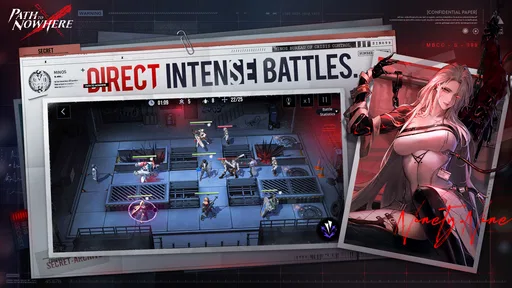
The combat is where the real-time strategy label becomes meaningful. Battles are not only about selecting a team and waiting for abilities to finish. I need to watch the field, consider where units are placed, and respond as threats develop. That creates a useful sense of responsibility: a strong roster helps, but poor positioning can still make a stage uncomfortable.
The most valuable habit I developed was treating the battlefield as a limited space rather than a simple line of targets. Moving a character at the right moment can be more useful than immediately activating an ability. I also learned to reserve attention for the enemy that is about to disrupt the formation instead of reacting to whichever target is closest. These small choices make the combat feel more personal than a fully automatic system.
For new players, I would avoid upgrading every character evenly at the beginning. Concentrating resources on a dependable core makes it easier to understand what each unit contributes. Once that foundation is stable, experimenting with different roles becomes less expensive and less frustrating. This is a practical trade-off: broad experimentation is enjoyable, but early resources are better spent with a plan.
Character collection has a strategic cost
Like many mobile role-playing games, the appeal of collecting characters is closely tied to progression. The temptation is to chase every new possibility, but a larger roster does not automatically create a better team. I got more value from learning how a small group worked together than from constantly replacing units because another design looked interesting.
This is also where the free-to-play structure deserves attention. The game is free to download, with in-app purchases ranging from $0.49 to $89.99 per item. I would approach those purchases as optional convenience or collection spending, not as a requirement for understanding the core experience. Anyone who is easily drawn into repeated small purchases should decide on a limit before beginning, because character-focused games make it easy to justify one more attempt.
The stronger question is not “Can I obtain everything?” but “Can I enjoy improving the team I already have?” If the answer is yes, the progression has more room to stay satisfying. If your enjoyment depends on collecting every character or keeping pace with every release, the financial and time pressure may outweigh the atmosphere that initially attracted you.
Three useful habits that are easy to miss
First, I recommend replaying a difficult encounter mentally before spending resources. Ask which enemy created the problem, whether a unit was placed too far from support, and whether an ability was used for damage when it would have been better saved for control. This turns a loss into a specific adjustment rather than an excuse to grind blindly.
Second, pay attention to the difference between a character who looks powerful and one who solves your current problem. A unit that controls space, protects a fragile teammate, or interrupts a dangerous enemy can be more valuable than another damage dealer. This is especially important when a stage punishes a narrow formation.
Third, separate story progression from roster experimentation. I found it less stressful to maintain one reliable team for advancing through the main content and use spare opportunities to test unusual combinations. That workflow protects progress while still allowing the strategic side of the game to remain interesting.
Who should choose this over a usual mobile RPG?
Compared with a conventional turn-based character collector, this game asks for more attention during the encounter itself. It is a better fit if you enjoy watching enemy movement, adjusting positions, and making decisions while the battle is active. A turn-based alternative may suit you better if you want unlimited time to inspect every action or prefer planning without pressure.
It also differs from a purely action-focused RPG. You are not mainly relying on reflexes or a single controllable hero. The pleasure comes from managing a group and reading the battlefield. Players who want fast manual combat may find the tactical layer less immediate, while players who enjoy strategic supervision may appreciate the extra control.
Finally, it is not the best choice for someone seeking a cheerful collection game with minimal reading. The setting, sound, and story all point in the same serious direction, and skipping that material removes much of what makes the mechanics distinctive. I would choose a lighter alternative for casual sessions with children or for anyone who dislikes bleak fiction.
My atmosphere verdict after living with the game
What stayed with me most was not a single battle or character, but the way the parts reinforce one another. The art makes the setting feel damaged and watchful. The sound gives quiet scenes enough tension to matter. The pacing alternates between investigation and crisis. The combat then asks me to express that crisis through positioning and timing rather than simply tapping an attack button.
That unity gives Path to Nowhere a stronger personality than many mobile RPGs. It does not feel like a generic battle system wearing a dark costume. The mood affects how I read the story, and the story gives the tactical encounters a reason to exist. Even the slower sections contribute to the sense that I am managing an unfolding emergency rather than clearing disconnected stages.
There are clear reasons to hesitate. The narrative can demand patience, the serious tone will not appeal to everyone, and the free-to-play collection model requires self-control. The game also asks for more attention than a fully automatic RPG, so it is not ideal when you want something to play without looking at the screen. Those are not minor details; they define the experience.
For me, the best way to approach it is as a story-led tactical RPG with a strong visual and audio identity, not as a quick character-collecting diversion. Give the opening enough attention, build a focused team, and treat losses as lessons about positioning rather than immediate reasons to spend. If you enjoy dark settings and real-time decisions, Path to Nowhere is an easy recommendation. If you want bright comfort, instant battles, or a game that can run itself while you multitask, I would point you toward a different kind of mobile RPG.
My final view is positive because the game knows exactly what atmosphere it wants to create and carries that intention into play. AISNO Games has made a role-playing experience where presentation is not separate from strategy. The result is moody, demanding, and occasionally slow, but also unusually coherent. The strongest reason to try it is the connection between its world and its battles: every careful move feels more meaningful because the game has already made the situation feel worth saving.
Verdict
Strengths of Path to Nowhere
- Deep, mature story with strong character writing
- Strategic combat rewards careful positioning and timing
- Distinctive art direction and high-quality voice acting
- Generous events provide regular goals and free rewards
- Playable without spending, with flexible team-building options
Limitations of Path to Nowhere
- Dark themes and disturbing scenes may not suit every player
- Requires frequent updates and considerable storage space
- Some stages can feel demanding without specific character roles
- Gacha progression may require patience for desired characters
- Energy limits can slow progress during longer play sessions
Similar Picks in This Category
View All
Hair Dye
CrazyLabs LTD4.4

Monster High™ Beauty Salon
CrazyLabs LTD4.5

Bus Simulator - Bus Games 3D
Jima Apps4.4

Flight Pilot: 3D Simulator
Wildlife Studios4.1


Super Stylist Fashion Makeover
CrazyLabs LTD4.4
Frequently Asked Questions
What kind of game is Path to Nowhere?
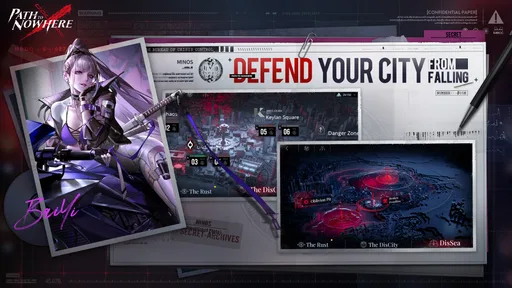
Path to Nowhere is a real-time strategy tower defense RPG with a dark, dystopian setting. You play as the Chief of the Minos Bureau of Crisis Control, commanding dangerous prisoners known as Sinners. During missions, you deploy characters, block enemy routes, trigger skills, and manage positioning. Outside combat, the game includes story scenes, investigations, character development, and resource management, making it more narrative-focused than a traditional tower defense title.
Is Path to Nowhere free to play?
Yes, Path to Nowhere can be downloaded and played for free on supported Android and iOS devices. It uses optional in-app purchases, mainly for premium currency, character recruitment, upgrade materials, and other bundles. Progress is possible without spending money, although obtaining specific Sinners or keeping up with every event may require patience. Players should also expect regular resource management and a gacha-style recruitment system.
Does Path to Nowhere require an internet connection?
Path to Nowhere is primarily an online game and generally requires a stable internet connection to access its servers, story content, events, recruitment features, and account progress. It is not designed as a fully offline experience. A reliable Wi-Fi or mobile data connection is recommended, especially when downloading updates or additional files. Availability and login performance can also depend on server maintenance and regional service conditions.
Is Path to Nowhere suitable for younger players?
Path to Nowhere is aimed at a mature audience rather than young children. The game contains a serious crime-themed storyline, psychological tension, violence, disturbing situations, and characters dealing with trauma and other dark subjects. It also includes in-app purchases and a character recruitment system that may resemble gacha mechanics. Parents should review the platform rating, spending controls, and the game's themes before allowing younger users to play.
Can Path to Nowhere be played without spending money?
Free-to-play users can enjoy the main story, tactical battles, character progression, and many limited-time activities without making purchases. The game provides resources through missions, events, daily activities, and regular rewards. However, progress may feel slower when building a large roster or attempting to recruit particular Sinners. Careful spending of premium currency, consistent play, and choosing upgrades wisely are important for players who want to avoid unnecessary purchases.
Play our best games!


